Japan’s Internal Affairs and Communications Ministry (Soumusho) is working to change regulations so that GPS is required on Japan’s mobile phones from April 2007.
This move has been expected for some time, but apparently details will be announced later in 2005. Nikkei reports that the accuracy of the location determination should be on the order of 150 meters.
Japan’s police receive about 9 million emergency calls per year, and Nikkei reports that about 1/2 of these are from mobile phones. For emergency calls from fixed line phones the precise location is communicated directly to the police and emergency service operators, however for mobile phones this is not the case, and the operators need to rely on the information given by the (often distressed) caller.
The regulations will require for the mobile operators to communicate the location of emergency callers to the Police and Fire Service emergency center operators.
Already for sometime KDDI sells almost all mobile phones with chips with built-in GPS (from Qualcomm), while all operators in Japan have developed a dense array of location based services which are deeply embedded in many mobile internet services. Today about 20% of mobile phones in Japan have GPS built-in, and we expect this ratio to increase to close to 100% around 2008-2010 (for more information consult our report on location based mobile services in Japan).
KDDI – Japan’s second largest telecom operator – streamlines the group
KDDI’s AU with TuKa acquires 3.5 million additional subscribers
KDDI announced to absorb the three TuKa companies into AU: with the stroke of a pen, AU will be stronger by 3.5 million subscribers.
The three TuKa companies managed a successful turnround by focusing on the silver market. We think that KDDI will probably switch off TuKa’s 2G PDC network quite soon, as they have done with their own 2G/PDC network.
TuKa had managed a successful turn-round recently, so it will not be a financial load on AU. KDDI will gain efficiency and economies of scale by concentrating all mobile services under the single AU brand with a single CDMA2000 network.
Learn about KDDI and AU, Japan’s No. 2 telecom operator
Report on “KDDI, AU and UQ Communications: pioneers of mobile music and flat data rates, analysis report” (approx 200 pages, pdf file)
Six years into the wireless internet revolution which started February 1999 in Japan
Docomo’s and KDDI’s latest wireless innovation, concept mobile phones, mobile payments
Wireless Japan 2005 marks six years of mobile internet in Japan, which started February 1999 in Tokyo. Now in the sixth year, wireless internet, i-Mode and EZweb and J-Sky are maturing, mobile payment solutions are being introduced.
Some highlights:
VOIP – 3G
fixed line – wLAN integration
first push-to-talk (PTT) appearance in Japan – will PTT arrive in Japan?
KDDI has timed it’s entry to DoCoMo’s mobile FeliCa camp to coincide with the time, when the railway nearfield payment card SUICA with 10 million users will join the mobile FeliCa system. KDDI demonstrated the first EZ-FeliCa phones:
EZ-Felica: RFID payments for KDDI’s AU mobile phones
DoCoMo is expanding the penetration for mobile FeliCa, demonstrating “TownPocket”: TownPocket is a FeliCa terminal, where users can link their phones via the FeliCa reader/writer interface to pick up local information. Possibilities are to bookmark automatically the URL of a shop or a sightseeing spot, or to send or receive an email with local information.
“TownPocket”: information terminals linking RFID equipped phones to local area informationEZ-FeliCa: RFID mobile payment gates for KDD-AU mobile phonesTownpocket RFID check-in point
Popularity of DoCoMo’s 901iS series accelerates DoCoMo’s transition to 3G.
With mobile phones quickly becoming pocket sized music centers in competition to iPod’s but in much larger numbers, battery life is a problem. Fuel cells give hope for longer life till the next recharge. As you can see in the picture, the prototype fuel cells are still too large for daily use:
Fuel cells for KDDI phones: fuel cell demonstrations for mobile phones have been demonstrated for many years at trade shows in Japan, but they have not made it to the market yet
Hitachi shows a prototype future generation phone with:
Futuristic concept phones are a tradition at the Wireless Japan show. The following images show multi-media concept phones:
Concept phone models
This flask-stile multimedia presenter shows images on flake-like suspended displays. Presentation of particular images helps to create the mood of the moment:
Concepts
Media phone:
Concept phone
Digital rights management (DRM) concept study. Digital rights are sold in the style of wrapped sweets, and can be played or eaten. Dropping a digital-right-sweet into the receptacle plays the music or the video corresponding to this right. The sweets/DRMs can be eaten up after their value has been used up:
e-Mobile is preparing for it’s debut in Japan’s mobile phone market, most likely from 2006 or 2007. While new mobile entrant Softbank was not at the Wireless Japan show, e-Mobile had a massive prototype and concept presentation.
First presentations by new market entrant “em” eMobileFirst presentation by new entrant eMobile “em”New entrant eMobile
e-Mobile showed a range of concepts for the services being developed with partners Fujitsu and Lucent. Good phones and solid concepts, but nothing surprising yet at this stage.
KDDI had a very large impressive show of AU’s range of mobile phones, business software applications, it’s range of mobile portals including comics, books, auctions, music and shopping, and EZ-FelIca’s debut as shown higher up. An attraction was a robot display, the robot is controled via blue-tooth by mobile phone:
KDDI demonstration: mobile phone as a remote control for robotsKDDI presents mobile phones as controllers for robotsMobile phones control robotsMobile phones control robots
We have substantial documentation about the Wireless Japan 2005 exhibition, and most other year’s Wireless Japan exhibitions. If you need information or documentation for prior art or other investigations, please contact us.
Learn more: report on Japan’s telecom sector (269 pages, pdf file):
Japan’s top three mobile operators DoCoMo, KDDI and Vodafone announced plans to invest about US$ 15 billion during FY 2005 (April 2005 – March 2006):
Infrastructure investments (capex) by Japan’s mobile phone operators – Vodafone’s investments were systematically reduced and are by far the lowest of Japan’s three large operators
About 20% of mobile phones have GPS in Japan, and both KDDI and DoCoMo are integrating location based services into their mobile internet services EZweb and i-Mode. We completed a report on location based services in Japan Eurotechnology Report on location based services and mapping in Japan.
On April 28, 2005 KDDI‘s CEO Tadashi Onodera, announced spectacular results for the financial year April 2004 – March 2005. Net income increased by 71% and KDDI announced approximately US$ 4 Billion in investment capital expenditure for the financial year 2006 (April 2005 – March 2005).
March is the month when new subscriptions peak in Japan. During March 2005 around one million new subscribers signed up for mobile services in Japan, the net gain (new subscriptions minus cancellations) was 930,500. New subscribers were shared as follows between carriers:
Vodafone announced a new method to calculate numbers. Without this new way of calculating, Vodafone’s loss would have been: -58,400
Net growth (loss) of subscribers per month for Japan’s mobile operators – Vodafone drops into the red, losing subscribers despite a new way of counting them
Net growth (loss) of mobile internet subscribers (i-Mode, EZweb and Vodafone Live!): since Vodafone renamed Jsky to Vodafone Live!, its rapidly losing market share
e-Access Chairman & CEO, Sachio Semmoto and Lucent Chairman & CEO Patricia Russo on March 30, 2005 in Tokyo, explained their joint tests of HSDPA services in Tokyo. e-Access is preparing to enter Japan’s mobile communications industry with the brand “e-Mobile”, and is currently conducting tests with Lucent and Fujitsu as equipment providers.
Former US Ambassador to Japan, Thomas Foley, presenting his wishes for the Lucent-eAccess cooperation:
US Ambassador Thomas Foley speaks a the conference announcing the cooperation between Fujitsu and Lucent to trial HSDPA network equipment for eMobile, while Lucent CEO Patricia Russo and eAccess/eMobile CEO Sachio Semmoto watch
Sachio Semmoto and Patricia Russo answering questions having presented their visions of new mobile services in Japan:
Lucent CEO Patricia Russo and eAccess/eMobile CEO Dr Sachio Semmoto at the conference announcing their joint network tests
e-Mobile’s logo:
em = e-Mobile’s interim logo (which was later changed)
Japan’s mobile subscriber numbers for Feb 2005 came out yesterday…
DoCoMo is ahead again after a soft period on the strength of services and handsets, and KDDI/AU is still going strong driven by the designer series, good tariffs/discounts, music, WIN etc.
Willcom (the former DDI-Pocket) is strengthening under new management, new name and new campaigns and network upgrades, TuKa is falling back after it’s great “TuKa-S” success… and Vodafone succeeded to stabilize subscriber losses somewhat which is a mild step in the right direction and might be the first indication of Mr Tsuda’s influence…
Stimulated by the needs of our customers, who need to roll out services across the networks in Japan, we have started market surveys, interviewing mobile phone customers of all kinds on Tokyo’s streets in “focus groups”, as we do when required for our customers to get a feel for the market. I always make a point to take part personally in such consumer research, and often do some myself. In the case of mobile phone habits, the first approach at interviewing just reflects back the messages of the commercials and publicity campaigns. Only in-depth interviewing and discussion then reveals the real thoughts which are normally quite different. We learnt a lot about what average Japanese consumers think about DoCoMo, AU and Vodafone, building up a good picture. But the numbers also tell a clear story:
Subscriber net growth/loss for Japan’s mobile phone and PHS operators
Ringing tones and mobile music are pioneered in Japan
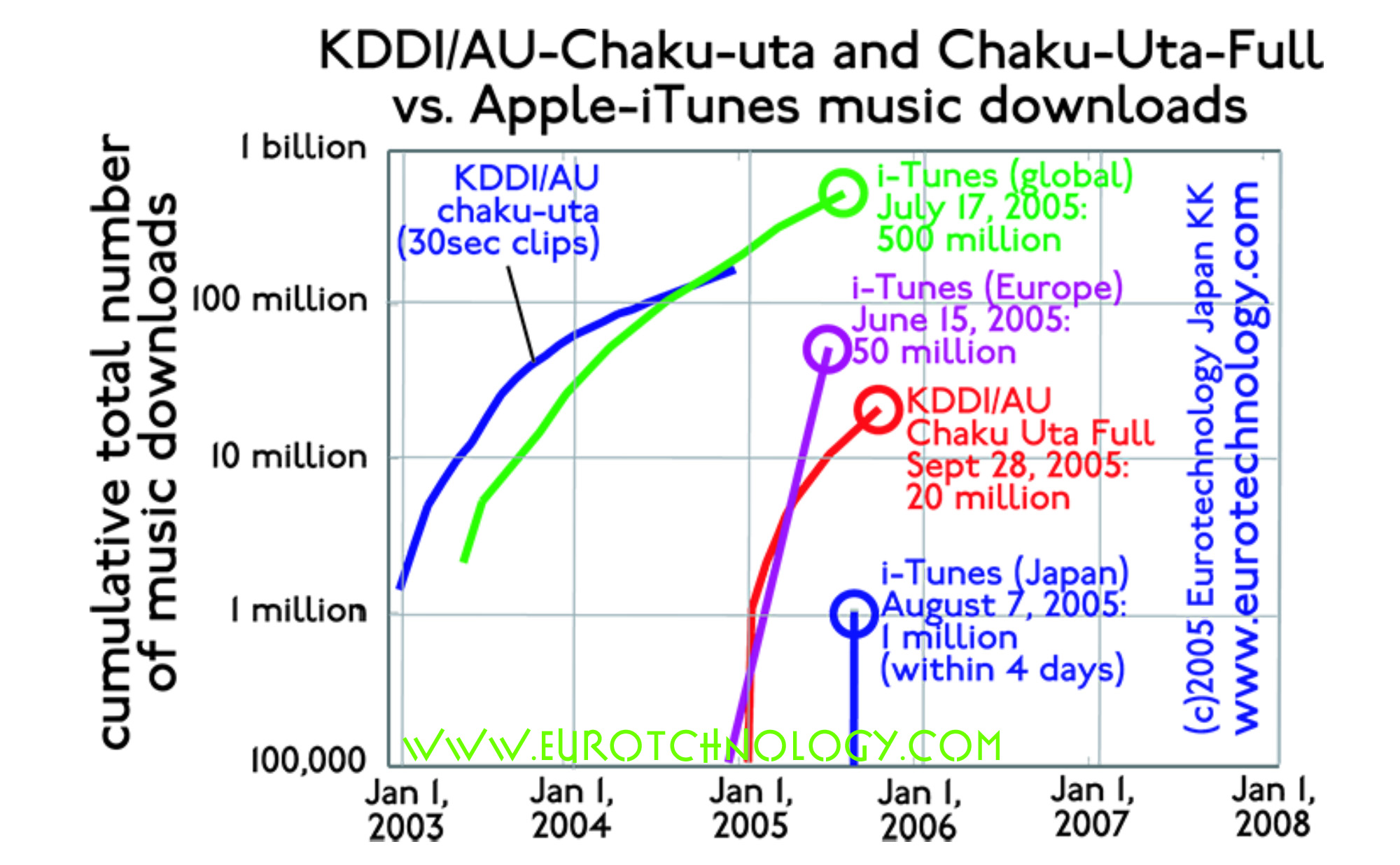
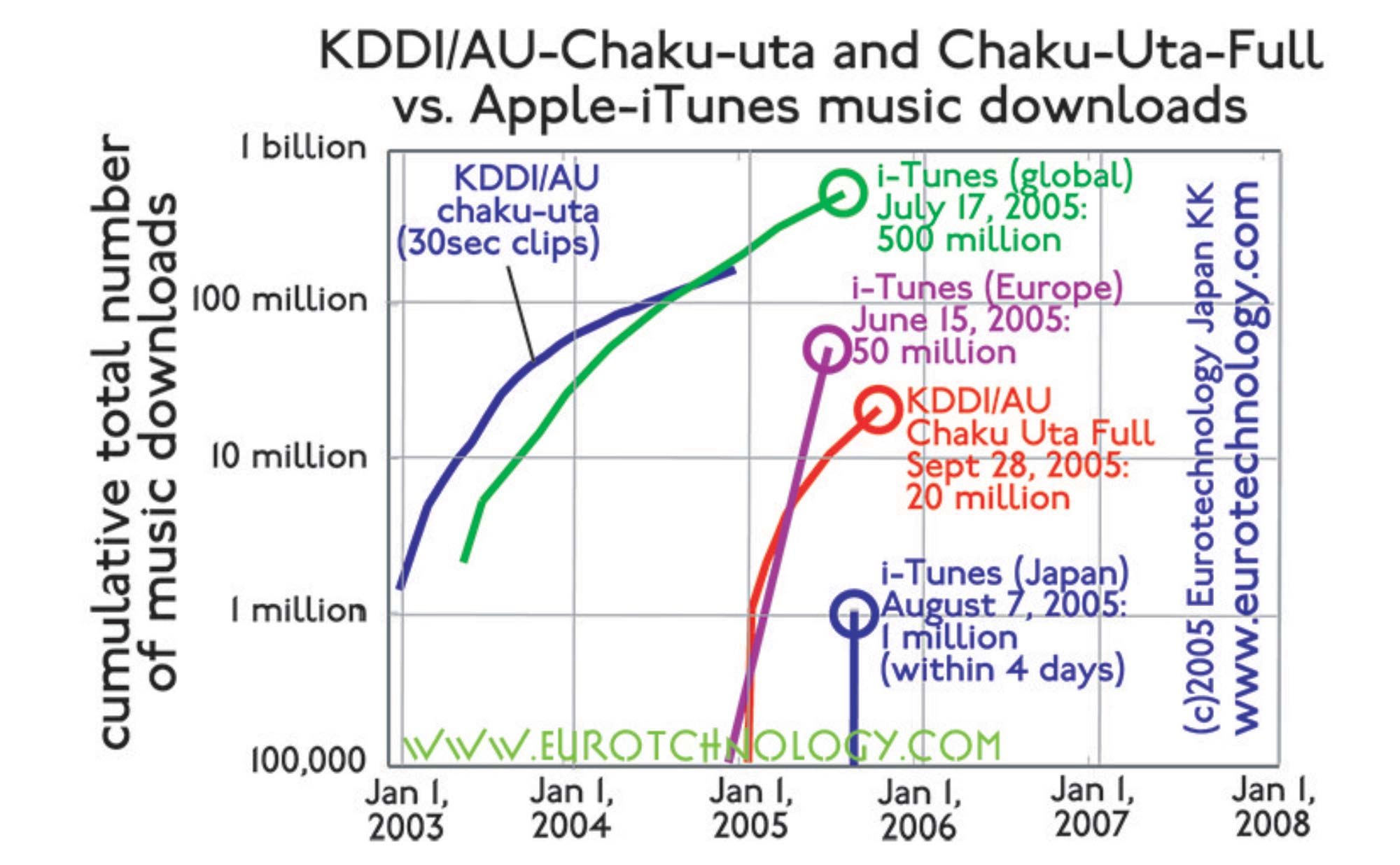
Put until mid-2004, cumulatively KDDI (Japan’s No. 2 mobile operator) sold more “chaku-uta” mobile music song clips in Japan alone than Apple sold music via iTunes globally.
This fact shows both the power of mobile music, and also the size of Japan’s mobile markets in terms of cash sales.
KDDI/AU reports 3 million Chaku-uta-full (full song) downloads since it’s start on November 19, 2004:
KDDI sells approximately as many chaku-uta music clips as iTunes sells music globally demonstrating the enormous size of Japan’s mobile music market
Vodafone recruits Shiro Tsuda, 津田志郎, the No. 1 founding employee of NTT’s mobile division
It appeared that Vodafone KK – with the help of a major headhunting firm – had staged a major success, when Vodafone KK headhunted Mr Shiro Tsuda as their Japan-CEO as of December 1, 2004. Mr Shiro Tsuda was the founding employee No. 1 of NTT’s mobile phone division, which later became NTT-docomo.
Shiro Tsuda quits a few months later
This temporary success turned into an embarrassment for Vodafone KK when a few months later, Mr Shiro Tsuda, resigned from his Vodafone KK-CEO position, became non-executive Chairman of Vodafone KK, and soon after left Vodafone altogether.
About one year after Vodafone-CEO Arun Sarun declared in February 2005 that Vodafone had the intention to remain in Japan for 10, 20, 30 years, on Friday March 17, 2006, Vodafone and Softbank announced that Vodafone sells Vodafone KK (the totality of all Vodafone operations in Japan) to Softbank, and terminated all operations in Japan.
Understand Softbank: our report: “SoftBank today and 300 year vision”
Vodafone’s challenges in Japan’s advanced telecommunications markets catch attention
Will Vodafone stay in Japan or give up and pull out?
Vodafone’s challenges in Japan: BusinessWeek and The Economist both analyze and comment on Vodafone’s business situation in Japan, where the mobile internet was first implemented successfully starting in February 1999, far earlier than anywhere else in the world.
The following figure compares Sales (Financial year ending March 31, 2004), Net profits after taxes(Financial year ending March 31, 2004), and market capitalization (as of February 17, 2005) for DoCoMo, KDDI and Vodafone (in each case consolidated for the global company):
Sales, net income and market cap for docomo, KDDI and Vodafone for the financial year 2004
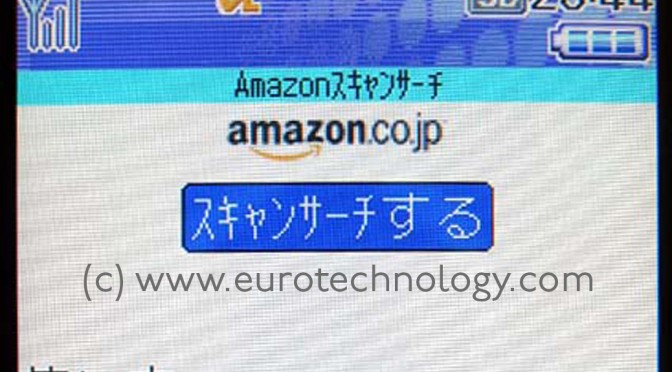
Amazon.co.jp introduced a barcode reader i-Appli (JAVA application for DoCoMo’s i-Mode phones), with which shoppers in brick-and-mortar stores can directly compare the prices with Amazon.co.jp’s mobile webstore prices. If the shopper prefers, he/she can order directly by i-Mode mobile phone from Amazon.co.jp online while still standing in front of the shelves of the brick-and-mortar store.
With this barcode reading mobile phone application (i-Appli), Amazon.co.jp is directly taking the competition into brick-and-mortar stores, battling on the same ground.
User interface of Amazon.co.jp’s barcode reading i-Appli – click to scan:
With Amazon.co.jp’s barcode scan application customers shopping in a store can compare prices with Amazon.co.jp’s ecommerce prices, and if cheaper, can order from Amazon.co.jp directly from the mobile phone
The customer can directly scan the barcode with his/her Docomo i-Mode phone, and the Amazon.co.jp barcode i-Appli:
Customer scans the barcode in a store using the Amazon.co.jp bar code application on a DoCoMo i-mode phone
On the next screen Amazon.co.jp’s i-Appli shows the same product’s page in the Amazon.co.jp mobile store. The customer can directly order with one click if he/she prefers Amazon.co.jp’s offer instead of the brick-and-mortar store, where he/she is currently shopping. This i-Appli allows Amazon.co.jp to catch customers from within traditional stores.
After scanning the barcode, the Amazon.co.jp i-appli directly shows the price and order page of the same product on the Amazon.co.jp mobile site
Read our QR-code report for in-depth analysis and lots of applications of QR-codes and bar codes in Japan.
More Chaku-Uta mobile music downloads by KDDI in Japan than by Apple’s iTunes globally
Turns out that music is a killer application on mobile – we are working on a number of projects in the mobile music field. We just completed our “Mobile Music Japan” report.
With an incredibly much smaller potential customer base KDDI/AU delivered more downloads of 20-30 second songs (chaku-uta) than Apple’s i-Tunes. Motorola reportedly announced a mobile phone incorporating i-Tunes at the recent CES show in Las Vegas. KDDI/AU‘s tremendous success with chaku-uta indicates that combining Motorola phones with i-Tunes will be very successfull indeed. AU reported 1 million Chaku-Uta-Full downloads within the first 48 days of service (chaku-uta-full started on November 19, 2004).
Finland’s Government R&D and technology agency TEKES engaged our company to prepare input for the planning of TEKES’ five year VAMOS project on mobile services.
In today’s Wallstreet Journal (Dec 7, 2004), Mike Volpi, Senior VP of CISCO’s routing technology group, is quoted as saying:
“In the past the internet business models, technologies and applications were all coming from the US, but today, through broadband, Japan is about to become the number one country in the area of Internet. In the future, I believe Internet business models will come from Japan.”
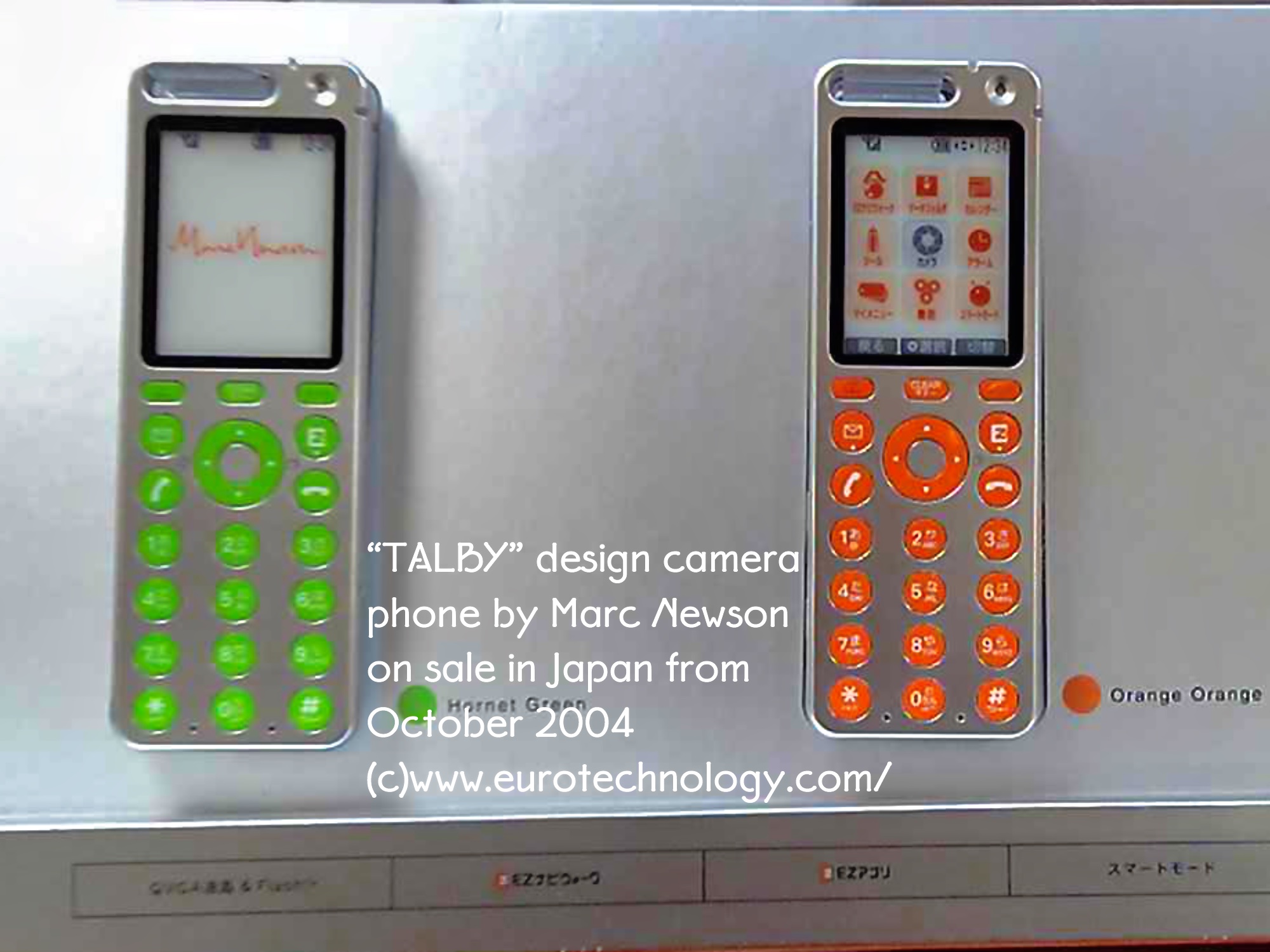
Marc Newson designed Talby concept phone for Japan’s mobile operator KDDI – au
On 13 October 2004, KDDI/AU announced “talby”, the third phone in their “AU design series”. Volume sales start in December 2004. We expect that “talby” will be similarly successful as “infobar” one year ago.
“talby” is a fully featured 3G phone with camera (640×480 pixel), QVGA display, EZappli/BREW, Chaku-uta, email, EZweb, PIM, GPS/EZnaviwalk,…
According to newsreports, Japan’s ruling coalition decided on a draft law, which will make identification requirements for obtaining prepaid phones more strict, instead of totally outlawing prepaid phones. It is reported that according to this bill the transfer of mobile phones to third parties would become a punishable offence. So if this bill becomes law, you risk a prison sentence if you lend your prepaid mobile phone to others in Japan – be warned.
For detailed statistics on size, market shares and analysis of Japan’s prepaid phone market, consult the latest edition of our report on Japan’s telecom sector.
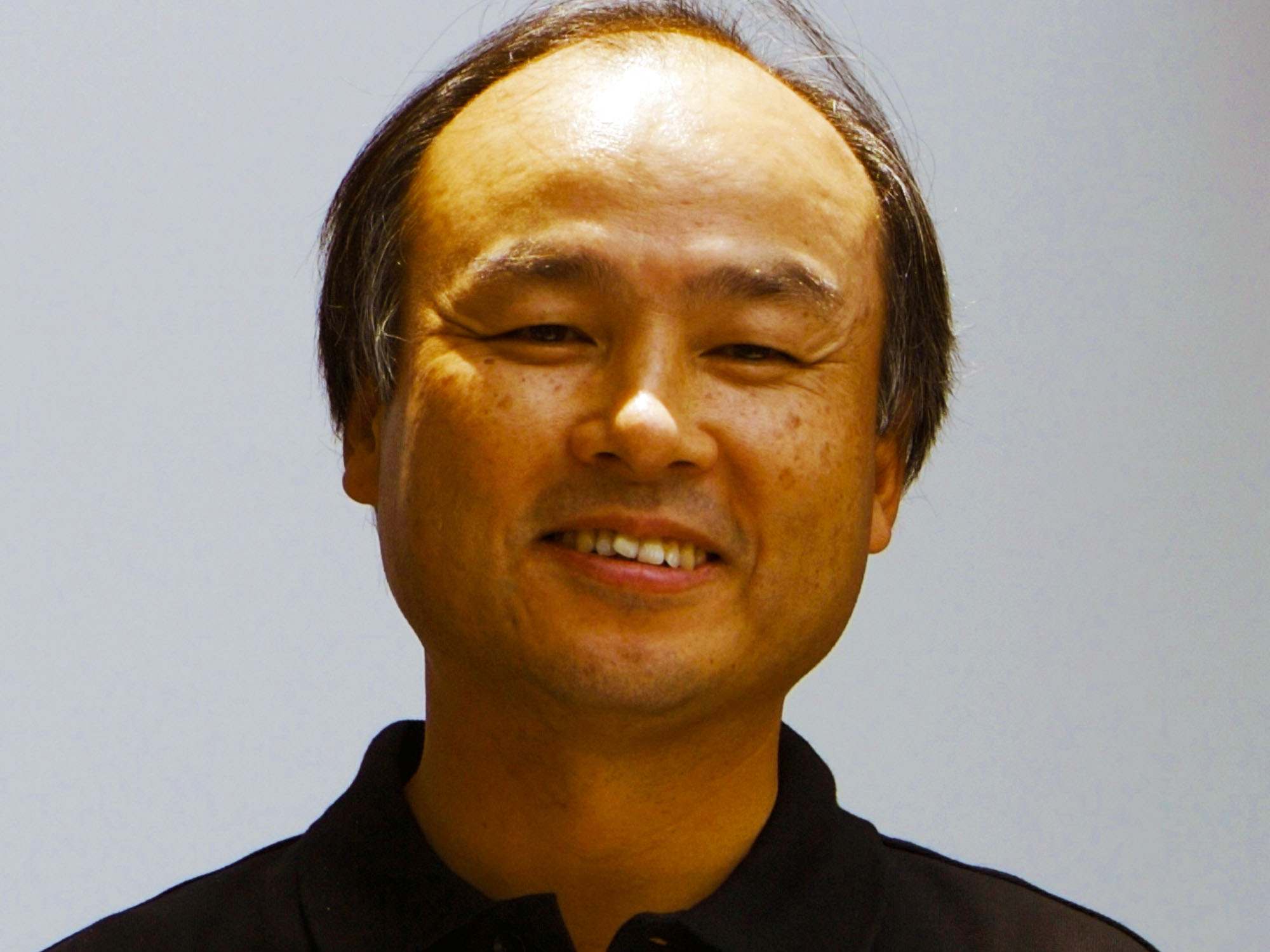
Businessweek Editor David Rocks: “if you would meet Masayoshi Son, what would you ask him?
by Gerhard Fasol
Businessweek Editor David Rocks came three weeks to Japan to report on Japan’s telecommunications and technology sectors, arrived Friday and took me for dinner Friday night. A few days later David Rocks called me during my lunch break and asked me: “if you would meet Masayoshi Son, what would you ask him?” Turned out David was going to interview SoftBank Founder and CEO Masayoshi Son a about an hour later. I proposed three questions. Later David Rocks called me back, and told me Masayoshi Son’s answers, which are enclosed here as well.
My question: Are rumors true, that Masayoshi Son threatened to set himself on fire inside the Japanese Post- and Telecommunications Ministry, in case he is denied a telecommunications license he had applied for?
Masayoshi Son’s answer (as told to me by David Rocks): Yes, these rumors are true, however I did not take any fuel along with me inside the Ministry
My question: I wish Europe would have someone like Masayoshi Son to accelerate innovation in Europe’s telecommunications sector. Do you have plans to expand SoftBank to Europe?
Masayoshi Son’s answer (as told to me by David Rocks): No plans for Europe at this time.
My question: How can you finance your plans to grow your business? Who are your financial backers?
Masayoshi Son’s answer (as told to me by David Rocks): We have sufficient finance to grow SoftBank’s business.
The photograph of Masayoshi Son is used under Creative Commons license according to Wikipedia.
Copyright details are:
Description English: Masayoshi Son on July 11, 2008
Date 11 July 2008, 12:11:02
Source iPhone 3G Masayoshi Son Masaru Kamikura (http://www.flickr.com/photos/kamikura/2658524938/)
Author Masaru Kamikura (http://www.flickr.com/people/20119192@N00) from Japan
This file is licensed under the Creative Commons Attribution 2.0 Generic
(https://creativecommons.org/licenses/by/2.0/deed.en) license.
The government coalition in Japan is preparing a law to outlaw prepaid mobile phones. The reason given is that too many prepaid phones are used for crimes, e.g. the “ore ore” fraud.
The number of prepaid phones in Japan is very small, but it’s not equally distributed. DoCoMo has almost no prepaid users, and has announced to abolish this service. Vodafone has about 10% prepaid users, and TuKa about 20% – so these will suffer when prepaid phones are outlawed.
Prepay phones as a ratio of all mobile phones in Japan compared to Europe and Italy
Update: on 12 November 2004 the ruling coalition decided on a draft law, which will not outlaw prepaid mobile phones, but will make identification requirements more strict. (See update above)
The SonyEricsson mobile phone design team gave a very impressive presentation of their work at the Swedish Embassy yesterday.
Here is Art Director Mr Kawagoi, who created the famous SonyEricsson logo, explaining the messages contained in his creation:
SONY-Ericsson Design Director explaining his thoughts behind creating the SONY-Ericsson logo
Here Swedish Managers of the SonyEricsson Creative Design Center from Lund/Sweden:
SONY-Ericsson presentation at the Embassy of Sweden in Tokyo
My conclusion: expect a lot more great designs out of SonyEricsson. Also, there is every indication it’s a very successful Japan-Swedish cooperation.
[images in this post are taken with a DoCoMo/Sharp SH900i 3G/FOMA camera-phone in 2Megapixel setting, and sent through the air via DoCoMo’s FOMA network. Images are reproduced here in much less than the original 1224 x 1632 pixel size, which would not fit on most PC screens.]
updated most statistics and graphs
added a section on mobile games on i-mode
updated the international section
updated the 3G section
updated the i-mode-FeliCa wallet-phone section
corrected many errors updated the section on Japan’s telecom landscape: added recent transactions, and updated graphics
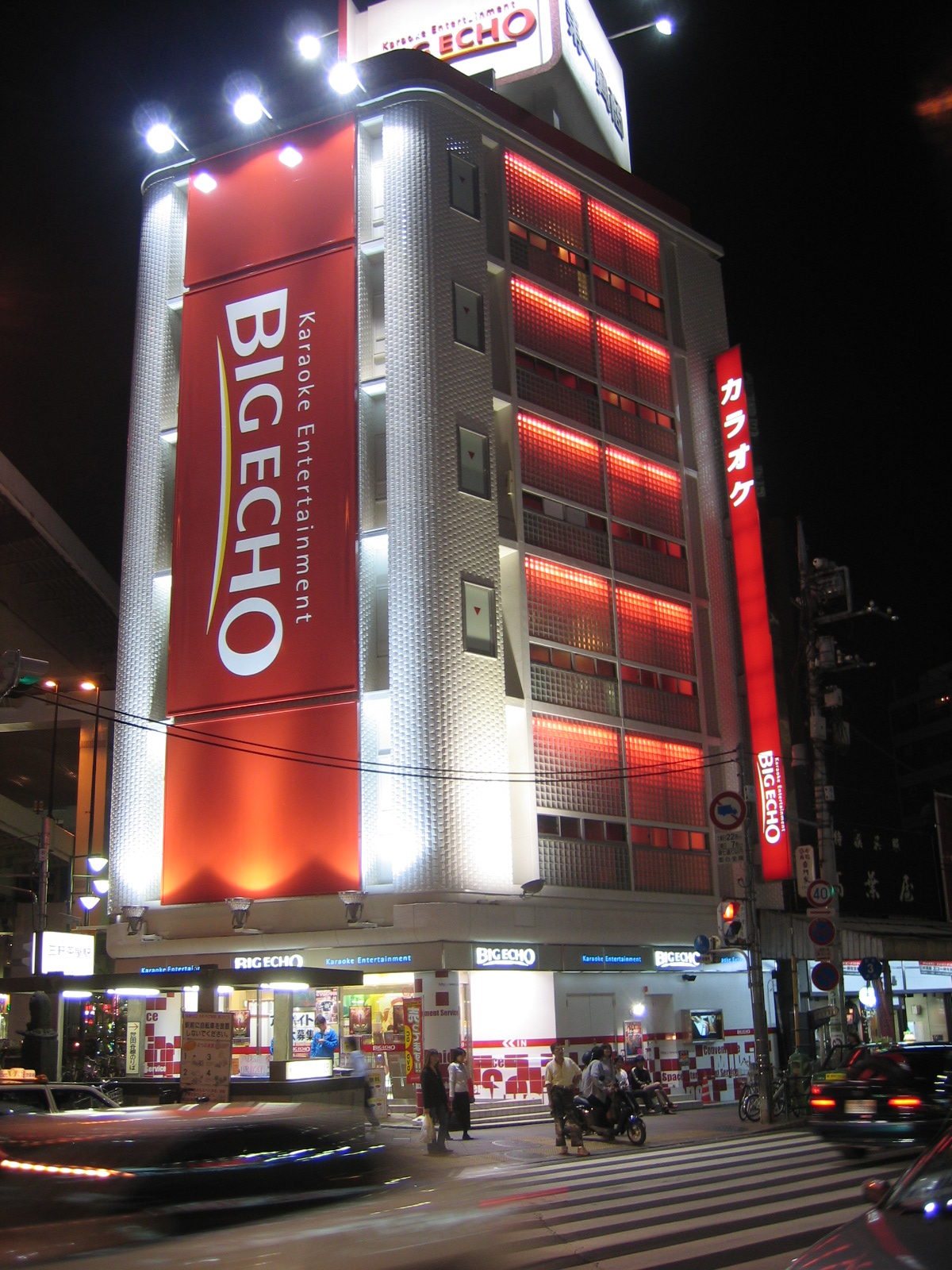
There is a saying the that the Prophet is not recognized within his/her own country – and I think that the inventor of Karaoke, Inoue Daisuke (井上 大佑) is not as famous in his own country as he deserves – but he was now recognized for his outstanding invention by the “Ig Nobel Prize” committee in the PEACE category.
This years Ig Nobel Peace Prize was awarded on September 30, 2004 to Inoue Daisuke, for inventing karaoke, thereby providing an entirely new way for people to learn to tolerate each other.
“Karaoke” means “empty orchestra” (KARAOKE = KARA (= empty) + OrKEstra).
Prepaid mobile phones are a huge business in Europe.
In Japan prepaid mobile phone numbers are tiny, and NTT’s new CEO just announced that NTT-DoCoMo is planning to stop offering prepaid mobile phones altogether.
Find detailed statistics and market shares per operator for Japan’s prepaid market in our report on Japan’s telecommunications sector.
Cable & Wireless Japan staged what it said was one of the first “hostile” takeovers in Japan, but then proved to be unable to manage the company they had acquired
On October 26, 2004, Softbank announced the acquisition of Cable & Wireless IDC for YEN 12.3 billion (= US$ 110 million)
Cable & Wireless Japan: Today’s top article in Nikkei is about Cable and Wireless-Japan: the article reports that Cable and Wireless is in discussion with Softbank and a private equity firm to sell their Japan operations. Apparently this news article is not confirmed, and it already mentions a purchase prize on the order of US$ 100 million. This article appeared in the top position in Nikkei – but there are several things a bit mysterious about it.
Cable & Wireless Japan – why did they fail in Japan?
I did not follow Cable and Wireless recently in Japan, but it seems that C&W made a loss of YEN 61.6 OKU on sales of YEN 713 OKU, i.e. almost 10% loss.
Since we are insiders in Japan’s telecom sector, we know most of the details. To out it into short words, Cable & Wireless did not have the knowhow to manage a Japanese company. They tried but failed, and alienated a lot of people.
Spent all morning discussing with one of the innovation managers of a big European telco. Interesting. Spent afternoon with a US bio-tech company which which is thinking of asking us to build their business in Japan, and in the evening listened to a talk by Tadashi Onodera, the CEO of KDDI. Expected him to talk mainly about mobile – but he did not. His focus was a national VOIP network they are building, attacking the fixed line income of NTT. Got hold of him after his talk and discussed with him for about 10 minutes.
UPDATE: on October 26, 2004, Softbank announced the acquisition of Cable & Wireless IDC. Total cost of the acquistion is announced as YEN 12.3 billion (= US$ 110 million)